
The Real Reason Your Foundation Looks Patchy by Noon
By Sonia Roselli
You put your foundation on this morning and it looked great. By noon it looked like it was making decisions without you.
I've watched this happen on thousands of faces over 35 years. And I will tell you right now — it is not the foundation's fault.
Foundation is a passenger.
It sits on your skin. It doesn't bond to it, fix it, or negotiate with it. Whatever your skin is doing, foundation is just along for the ride. And if the surface underneath is a mess, foundation will tell on it every single time.
Here's what's actually going on.
If your skin is dehydrated, foundation gets absorbed into it unevenly — because dehydration is never uniform. Some spots drink it in faster. You've got patchiness before lunch.
Quick note: dehydrated skin and dry skin are not the same thing. Dry skin lacks oil. Dehydrated skin lacks water. You can have oily skin that is completely dehydrated. If your foundation slides off what looks like well-moisturized skin, that's probably you.
If you have dead cell buildup, foundation catches in it. Looks fine in your bathroom mirror. Under natural light or on camera? Heavy and layered. Coverage wears off in weird patches. Fine lines look worse, not better.
If your barrier is struggling, your skin compensates by producing more oil. T-zone breakdown by noon isn't random. It's your skin doing its job. Foundation doesn't stand a chance without the right base underneath it.
Three different problems. Same result.
The industry's answer to the T-zone problem was mattifying products. Matte primers. Pore-minimizing formulas. Oil-control sprays. All of those address the symptom. None of them address what's causing it.
Your skin is overproducing oil because it's trying to compensate for something. You add products on top to suppress the oil. Your skin works harder to compensate. By noon, your skin has won.
Here's what actually works. Four minutes. Four steps.
Cleanse without stripping. If your skin feels tight within a few minutes of washing, your cleanser is removing too much. You've already created the problem before makeup goes on.
Exfoliate the surface layer.
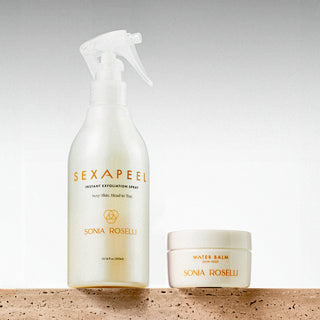
Consistent, light exfoliation keeps buildup from accumulating. On makeup days, Sexapeel Spray on dry skin, wait a few minutes, wipe or rinse. What you're left with is fresh skin, not dead cell buildup.
Hydrate immediately after. Right after exfoliation, your skin is more receptive to hydration. Water Elixir goes on here. Absorbs like water. Feeds the skin before anything else lands on top.
Apply barrier support. A small amount of ceramides and fatty acids pressed in, not rubbed. Water Oil does this.
It fills in the surface, supports what your skin needs to stop compensating, and creates the base foundation actually wants to sit on.
That's it. That's the prep sequence that changes the result.
I'm not telling you foundation formula doesn't matter. It does. There are real differences between formulas.
But I have watched excellent foundations fall apart on unprepared skin.
And I've watched drugstore foundations look extraordinary on skin that was set up correctly.
The variable most people aren't controlling — and that the industry has zero financial incentive to tell you about — is what you do before the foundation goes on.
Your foundation patchiness is almost certainly a skin prep problem.
Start there.
Water Elixir and Water Oil are formulated in Japan specifically for this prep sequence. For the best results, the Starter Kit, Ageless Beauty is the move.
Sonia Roselli is a licensed esthetician and celebrity makeup artist with 35 years on set.