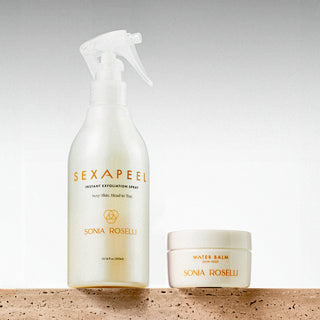
When your skin reacts to everything—from the water you wash with to the air you breathe—it becomes more than a cosmetic concern. It becomes a daily negotiation with your own body. You're not alone in this. Millions of people experience reactive, hypersensitive skin that seems to protest every new product, every environmental shift, every minor change in routine. The question isn't whether your skin will react; it's what will trigger it today.
I built Sonia Roselli Beauty because my own skin reacted to everything. After years of dermatological treatments and prescription medications that either didn't work or made things worse, I realized that the problem wasn't my skin—it was the products designed for it.
My skin needed something radical: fewer ingredients, more integrity, absolute clarity about what goes on my face. This guide exists because I've walked this path, and I understand the frustration, the cost, and the profound relief of finally finding something that works.
Why Your Skin Reacts to Everything
Genetics and Predisposition
Some of us are simply wired for sensitivity. If your parents experienced reactive skin, rosacea, eczema, or other inflammatory conditions, you likely inherited a heightened skin sensitivity. Your skin barrier—the outermost layer responsible for protecting against environmental stressors and retaining moisture—may have a genetic predisposition toward inflammation.
This isn't a flaw. It's a variation in how your immune system responds to perceived threats. Your skin is essentially vigilant to the point of oversensitivity, mounting an inflammatory response to irritants that wouldn't bother others. Understanding this genetic component is liberating because it means your skin's reactivity isn't a personal failure or the result of bad skincare choices. It's neurobiology.
Compromised Skin Barrier Function
The skin barrier is composed of lipids (fats), proteins, and natural moisturizing factors that work together to keep irritants out and hydration in. When this barrier is compromised, your skin becomes reactive to almost everything.
What damages the barrier:
- Overuse of active ingredients (retinoids, acids, vitamin C serums)
- Excessive cleansing or use of harsh surfactants
- Frequent exfoliation, both physical and chemical
- Exposure to extreme temperatures and low humidity
- Chronic stress and poor sleep
- Inflammatory skin conditions like rosacea or dermatitis
- Certain medications that increase skin sensitivity
Once compromised, a damaged barrier creates a vicious cycle. Your skin loses its ability to retain moisture, becomes tight and reactive, and you respond by introducing more products to "fix" it. More products mean more potential irritants, further compromising the barrier. This is why sensitive skin often gets worse before it gets better—most people try to treat the symptoms rather than rebuild the foundation.
Sensitization from Ingredient Overload
Your skin has a cumulative sensitivity threshold. Regular exposure to preservatives, fragrance, essential oils, and certain active ingredients can gradually sensitize your skin, making it reactive even to products that didn't bother you initially.
This is different from allergic reactions. Sensitization develops over time as your skin's immune system becomes increasingly intolerant. You might use a product for months without incident, then suddenly experience redness, stinging, or burning. The product didn't change. Your skin's tolerance did.
Identifying Your Personal Triggers
Living with reactive skin means becoming a scientist in your own skincare laboratory. Generic advice won't serve you because trigger profiles are deeply individual.
Common Environmental and Lifestyle Triggers
- Temperature fluctuations: Heat, cold, and rapid temperature changes trigger vasodilation in reactive skin
- Humidity levels: Both extreme dryness and high humidity can provoke reactions
- Stress: Cortisol and inflammatory markers spike with stress, manifesting visibly on reactive skin
- Hormonal cycles: Many people experience heightened reactivity before menstruation or during hormonal shifts
- Sleep deprivation: Your skin repairs itself during sleep; insufficient rest compromises barrier function
- Dehydration: Not enough water intake affects skin hydration from within
- Sun exposure: UV radiation is inflammatory; even brief exposure can trigger reactions in sensitive skin
- Certain foods: Common culprits include spicy foods, alcohol, high-histamine foods, and dairy
Common Product-Based Triggers
The irony of sensitive skin is that the products meant to help often cause harm. Beyond obvious irritants like fragrance and essential oils, consider:
- Preservative systems: Even "gentle" preservatives can sensitize over time
- Surfactants in cleansers: Even sulfate-free options can strip the skin barrier
- Botanical extracts: While marketed as soothing, some extracts are pro-inflammatory
- Antioxidants like vitamin C: Powerful but oxidative; can cause irritation during application or storage
- Niacinamide: Beneficial for many, but irritating for some with sensitive skin in high concentrations
How to Identify Your Triggers
The elimination method: Strip your routine to absolute basics—a gentle cleanser, a hydrating moisturizer, and sunscreen. Use these exclusively for 2-4 weeks. Your skin should stabilize. Then, introduce one new product at a time, waiting a full week between additions. When reactivity occurs, you've identified a trigger.
This requires patience and discipline, but it's the only reliable way to build a routine tailored to your skin's specific needs.
Keep a detailed log: Track not just which products you use, but environmental factors, stress levels, sleep quality, diet, and your skin's daily condition. Patterns emerge over time that reveal your personal trigger profile.
Rebuilding Your Skin Barrier
Once you've identified and eliminated triggers, the focus shifts to barrier repair. This is where "less is more" becomes not just philosophy but necessity.
The Minimalist Approach
Effective sensitive skin care involves:
- Gentle cleansing: A pH-neutral cleanser that removes dirt and oil without stripping
- Hydration: A moisturizer with humectants and occlusives to restore hydration
- Sun protection: Non-negotiable, as UV exposure delays barrier repair
- Strategic actives (if any): Introduced slowly and sparingly, not daily
Nothing else is necessary. No serums, no essences, no 10-step routines. Your barrier doesn't need complexity; it needs consistency and restraint.
The Role of Lipids and Ceramides
A compromised barrier lacks sufficient lipids. Ceramides—naturally occurring lipids in your skin—are essential for barrier function. A good moisturizer for sensitive skin contains ceramides, along with fatty acids and cholesterol in the proper ratios to mimic your skin's natural composition.
Active Ingredients and Reactive Skin
If you feel the need to address specific concerns, choose one targeted active and introduce it conservatively. Options for sensitive skin include:
- Azelaic acid: Anti-inflammatory and antimicrobial; particularly beneficial for rosacea
- Low-concentration niacinamide: Supports barrier function and reduces inflammation
- Centella asiatica: Soothing and barrier-supportive
- Hyaluronic acid: A hydrating humectant that supports barrier health
The key is low concentration, infrequent application (start 2-3 times weekly), and patience. Barrier repair takes time.
Finding Products That Actually Work
Most products claiming to be "for sensitive skin" are still overformulated. They contain multiple botanical extracts, preservatives, and fragrance that contradict the premise of gentle skincare.
What to Look For
- Short, transparent ingredient lists: You should be able to understand every ingredient and its purpose. While shorter ingredient lists statistically reduce the chance of encountering a personal trigger, there's no scientific cutoff—a well-formulated 30-ingredient medical cream can be safer than a 5-ingredient product with essential oils.
- Absence of common irritants: No added fragrance, essential oils, alcohol denat, or unnecessary botanical extracts. No "parfum" listed anywhere.
- pH-matched to skin: Cleansers should match your skin's natural pH of 4.7-5.75. High-pH (alkaline) cleansers above 7.0 can swell the stratum corneum and disrupt lipid synthesis.
- Minimal preservative load: One or two preservatives maximum, chosen for stability and safety profile.
- Honest formulation: Actives are listed in appropriate concentrations (not marketing ingredients at negligible levels).
- Transparency about sourcing and testing: You should know what went into the formula and how it was safety-tested.
The Ingredient Hierarchy for Sensitive Skin
- Essential: Water, humectants (hyaluronic acid), emollients (oils or butters), occlusives (ceramides or squalane), and gentle preservatives
- Optional but beneficial: One targeted active (azelaic acid, niacinamide, centella asiatica)
- Never necessary: Fragrance, essential oils, multiple botanical extracts, alcohol, unnecessary thickeners
The Sonia Roselli Approach
When I designed skincare for my own reactive skin, I started with a single principle: every ingredient must earn its place. No filler, no fragrance marketing, no complexity for its own sake.
The result is a deliberately minimal formulation philosophy. Our products are what they claim to be—no more, no less. A cleanser cleanses without stripping. A moisturizer hydrates and supports barrier function. No product is doing five things at once, which means no single product is likely to irritate you.
This isn't minimalism for aesthetic reasons. It's minimalism for efficacy. When you remove unnecessary ingredients, you remove unnecessary triggers. What remains is pure skincare architecture: the foundational elements your reactive skin actually needs.
FAQ
Q: Is my skin reacting to a product, or am I having an allergic reaction?
A: Allergic reactions are immediate (within minutes to hours) and involve histamine release—severe redness, itching, swelling, or hives. Sensitization is delayed and develops gradually over days or weeks, manifesting as stinging, redness, or tightness. While immediate IgE-mediated allergies are rare in skincare, allergic contact dermatitis (ACD)—a Type IV delayed hypersensitivity—is actually quite common; most reactions are sensitization or irritation. If you experience severe symptoms (difficulty breathing, facial swelling), seek medical attention.
Q: Can I use any active ingredients if I have reactive skin?
A: Yes, but with caution. Reactive skin isn't incompatible with actives; it's intolerant of multiple actives, high concentrations, and frequent application. One gentle active (azelaic acid, low-concentration niacinamide, centella asiatica) introduced slowly and used sparingly can benefit reactive skin. Never layer multiple actives or use them daily when your barrier is compromised.
Q: How long does barrier repair take?
A: Typically 4-12 weeks of consistent, minimal routines. Some people see improvement within 2 weeks; others require months. Patience is essential. Returning to more complex routines too soon will re-damage your barrier and reset your timeline.
Q: Should I see a dermatologist about my reactive skin?
A: Yes, if reactivity is severe, accompanied by persistent redness, or affecting your quality of life. Dermatologists can identify underlying conditions like rosacea, eczema, or allergic contact dermatitis and recommend appropriate treatment. A professional diagnosis clarifies whether you're dealing with hypersensitivity, inflammation, allergy, or disease.
If your skin reacts to everything, you're not dealing with a skincare problem that more products will solve. You're dealing with a barrier issue that demands restraint, clarity, and intention. The path forward isn't longer routines or more expensive formulas. It's fewer things, chosen carefully, applied consistently.
That's the philosophy embedded in every Sonia Roselli formula—born from the same frustration you're experiencing now, and designed for skin like yours.